-
HyperAutomation
Loading...

From Manual To Magical
Hyperautomation
As defined by Gartner, Hyperautomation is a business-driven, disciplined approach that organizations use to rapidly identify, vet and automate as many business and IT processes as possible. Hyperautomation involves the orchestrated use of multiple technologies, tools or platforms, including: artificial intelligence (AI), machine learning, event-driven software architecture, robotic process automation (RPA), business process management (BPM) and intelligent business process management suites (iBPMS), integration platform as a service (iPaaS), low-code/no-code tools, packaged software, and other types of decision, process and task automation tools.
Hyperautomation is a key enabler of digital transformation, often touted as being necessary for an organization's survival, but often hampered by economic pressures and talent shortages. We aim to help bridge this gap.
Benefits of Hyperautomation
Hyperautomation has become one of the most important technology trends of today and brings a range of benefits organizations can benefit from. It allows you to inject Artificial Intelligence into your organization operations across all types of work to optimize and automate content and workflow solutions. Some of the benefits are listed below:
- Higher Cost Savings
- Improved Productivity and higher Efficiency
- Information access
- Quality & Accuracy

Robotic Process Automation (RPA)
Definition
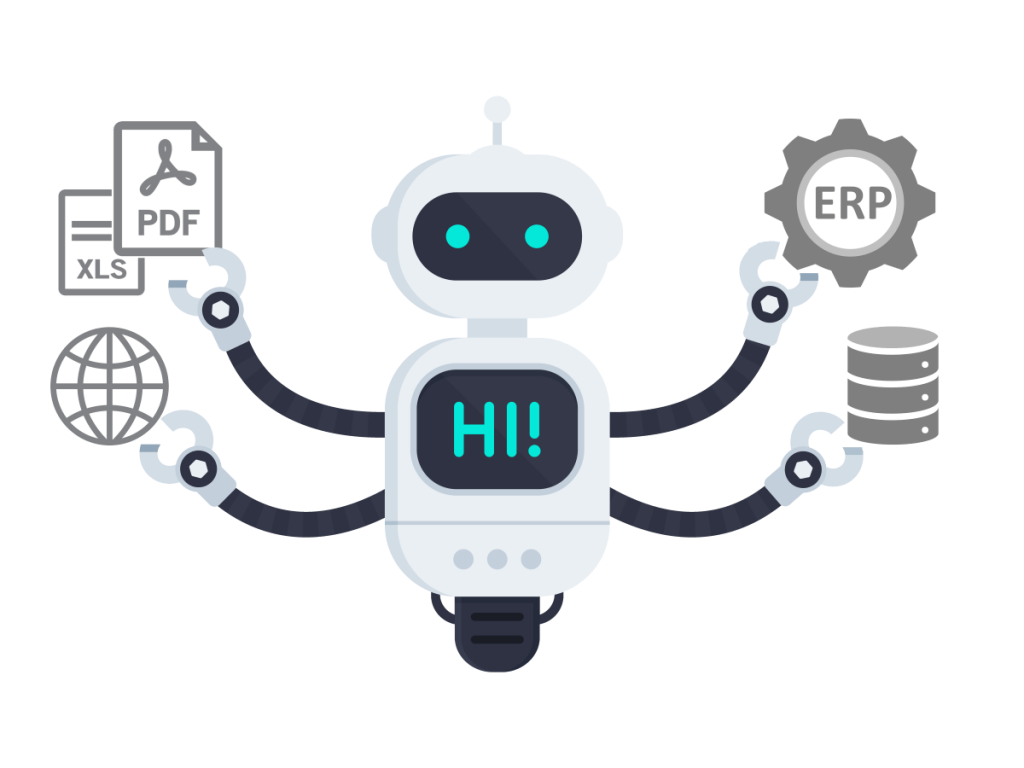
Robotic process automation (RPA) is a software technology that makes it easy to build, deploy, and manage software robots that emulate humans actions interacting with digital systems and software. Just like people, software robots can do things like understand what’s on a screen, complete the right keystrokes, navigate systems, identify and extract data, and perform a wide range of defined actions.
High Level Process
01Identification
Discovering opportunities for automation & vetting their potential impact to the business
02Build
Designing and building automation to best solve business problems .
03Test
Ensuring built automations are robust and can handle multiple types of scenarios .
04 Deployment
Safely placing the automation into a production environment, and supporting the automation in the long term .
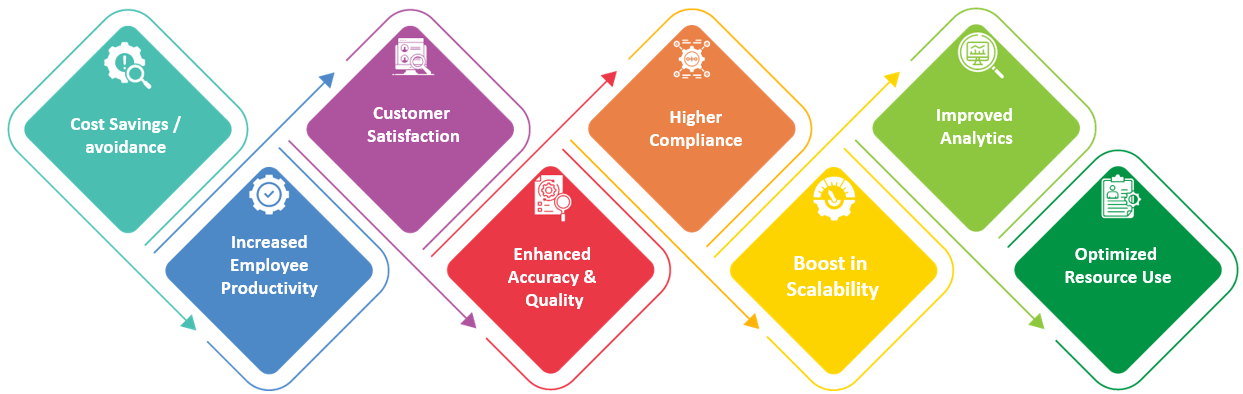
Benefits of RPA
RPA Case Studies

Accurate and Accessible Real-Time
NEL Commissioning Support Unit NHS found that Alphalake Ai was able to use Robotic Process Automation to generate reliable management reports in a way that is scalable to other areas of the unit and the wider NHS.
Accurate and Accessible Real-Time
NEL Commissioning Support Unit NHS found that Alphalake Ai was able to use Robotic Process Automation to generate reliable management reports in a way that is scalable to other areas of the unit and the wider NHS.

Accurate and Accessible Real-Time
NEL Commissioning Support Unit NHS found that Alphalake Ai was able to use Robotic Process Automation to generate reliable management reports in a way that is scalable to other areas of the unit and the wider NHS.
Process Mining
Definition
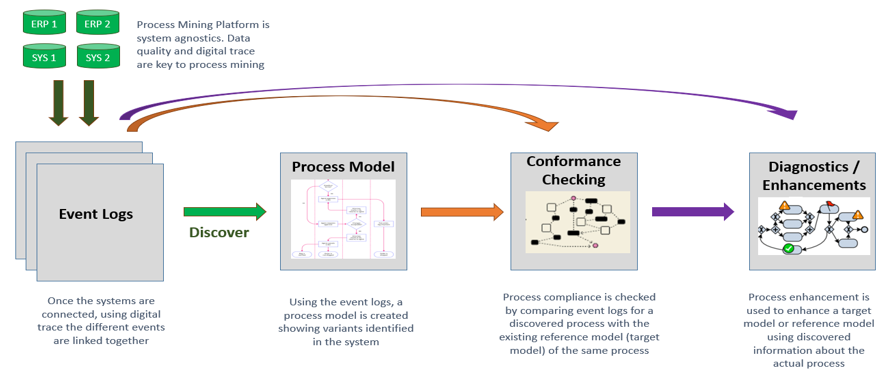
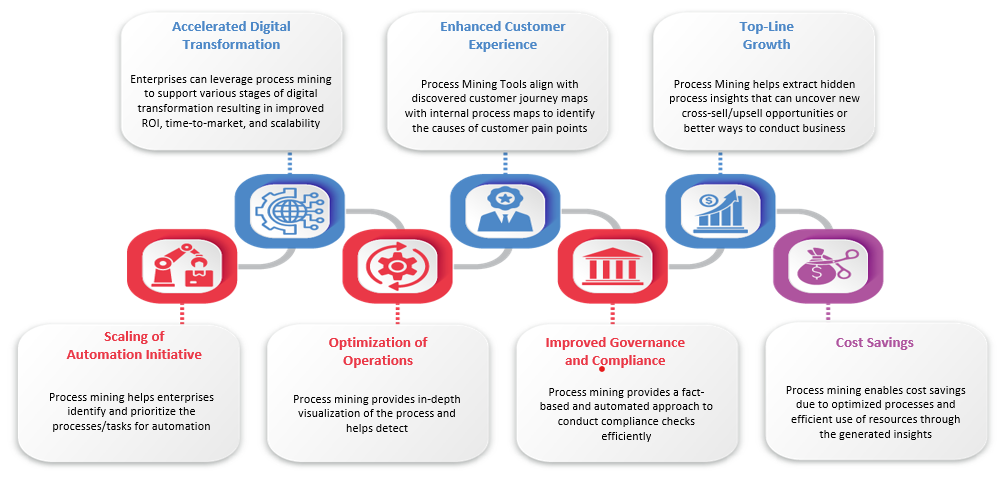
Process mining enables organizations to uncover their actual processes, provide insights, diagnose problems, and automatically trigger corrective actions. Process mining is an emerging scientific discipline positioned at the intersection between process science and data science.

High Level Process
Benefit of PM
PM Case Studies
Accurate and Accessible Real-Time
NEL Commissioning Support Unit NHS found that Alphalake Ai was able to use Robotic Process Automation to generate reliable management reports in a way that is scalable to other areas of the unit and the wider NHS.
Accurate and Accessible Real-Time
NEL Commissioning Support Unit NHS found that Alphalake Ai was able to use Robotic Process Automation to generate reliable management reports in a way that is scalable to other areas of the unit and the wider NHS.
Accurate and Accessible Real-Time
NEL Commissioning Support Unit NHS found that Alphalake Ai was able to use Robotic Process Automation to generate reliable management reports in a way that is scalable to other areas of the unit and the wider NHS.
Integrated Document Processing

Definition
Intelligent Document Processing is the automation of data extraction from complex semi-structured/unstructured documents and converting it into structured usable data. It is also referred as Cognitive Data Processing or Intelligent Data Capture. IDP takes advantage of Artificial Intelligence (AI), Machine Learning (ML), Optical Character Recognition (OCR), Computer Vision, and Intelligent Character Recognition (ICR) technologies to classify, categorize, extract relevant data, and validate the extracted data for improved accuracy.
High Level Process

Benefit of IDP
IDP Case Studies
Accurate and Accessible Real-Time
NEL Commissioning Support Unit NHS found that Alphalake Ai was able to use Robotic Process Automation to generate reliable management reports in a way that is scalable to other areas of the unit and the wider NHS.
Accurate and Accessible Real-Time
NEL Commissioning Support Unit NHS found that Alphalake Ai was able to use Robotic Process Automation to generate reliable management reports in a way that is scalable to other areas of the unit and the wider NHS.
Accurate and Accessible Real-Time
NEL Commissioning Support Unit NHS found that Alphalake Ai was able to use Robotic Process Automation to generate reliable management reports in a way that is scalable to other areas of the unit and the wider NHS.
Conversational AI
Definition
Process mining enables organizations to uncover their actual processes, provide insights, diagnose problems, and automatically trigger corrective actions. Process mining is an emerging scientific discipline positioned at the intersection between process science and data science.
High Level Process
Benefit of PM
PM Case Studies
Accurate and Accessible Real-Time
NEL Commissioning Support Unit NHS found that Alphalake Ai was able to use Robotic Process Automation to generate reliable management reports in a way that is scalable to other areas of the unit and the wider NHS.
Accurate and Accessible Real-Time
NEL Commissioning Support Unit NHS found that Alphalake Ai was able to use Robotic Process Automation to generate reliable management reports in a way that is scalable to other areas of the unit and the wider NHS.
Accurate and Accessible Real-Time
NEL Commissioning Support Unit NHS found that Alphalake Ai was able to use Robotic Process Automation to generate reliable management reports in a way that is scalable to other areas of the unit and the wider NHS.
Generative AI
Definition
Intelligent Document Processing is the automation of data extraction from complex semi-structured/unstructured documents and converting it into structured usable data. It is also referred as Cognitive Data Processing or Intelligent Data Capture. IDP takes advantage of Artificial Intelligence (AI), Machine Learning (ML), Optical Character Recognition (OCR), Computer Vision, and Intelligent Character Recognition (ICR) technologies to classify, categorize, extract relevant data, and validate the extracted data for improved accuracy.
High Level Process
Benefit of IDP
IDP Case Studies
Accurate and Accessible Real-Time
NEL Commissioning Support Unit NHS found that Alphalake Ai was able to use Robotic Process Automation to generate reliable management reports in a way that is scalable to other areas of the unit and the wider NHS.
Accurate and Accessible Real-Time
NEL Commissioning Support Unit NHS found that Alphalake Ai was able to use Robotic Process Automation to generate reliable management reports in a way that is scalable to other areas of the unit and the wider NHS.
Accurate and Accessible Real-Time
NEL Commissioning Support Unit NHS found that Alphalake Ai was able to use Robotic Process Automation to generate reliable management reports in a way that is scalable to other areas of the unit and the wider NHS.